
House & Property Clearance

Flat & Apartment Clearance

iTrade clears flats and apartments in Norfolk. The clearance can cover the whole flat or only the rooms and items you choose, and anything you are keeping is left alone. The quote is based on how the contents get from your door to the vehicle. That means the floor level, the lift and stairs, the building's rules and where loading is allowed. Photographs of the route are often enough, but some buildings need a survey first.

Quick answer

Who it is for: Flat owners, tenants, landlords, agents and executors clearing an apartment, including upper-floor and no-lift buildings.

What it covers: Full or partial clearance of a flat's contents, planned around the lift, stairs, communal areas and loading point.

When a survey is needed: Photographs of the flat and the whole route to the road can be enough. A survey may be needed if the lift is small, the stairs are tight or loading is restricted.

iTrade assesses the route as a whole. It runs from the flat door through any lift, stairwell and communal corridor to the point where a vehicle can load. A single tight turn, or a lift too small for a wardrobe, can change how a large item is moved. If an item will not fit the lift, stairs or dismantling need separate assessment, and neither is an automatic safe alternative.

The building usually controls the lift, the communal areas and loading. Permission for working hours, lift bookings and parking comes from the building manager or managing agent, and they may require contractor documents. Ask them early and share their answers with iTrade so the arrangements can be agreed in writing. Secure any permit or booked slot before the clearance date is fixed.

A clearance removes only what you have agreed should go. Belongings you are keeping stay in the flat or are set aside as instructed. Moving them to another address is a separate arrangement and is not part of the clearance.
Scope

What is included, what needs checking, and what is not

Included as standard
  • Clearance of the flat's contents, full or partial as agreed
  • Planning the carry route around the lift, stairs and loading point
  • Protecting communal stairwells, lifts and corridors as agreed with the building
  • Setting aside anything you have asked to keep
  • Sorting for reuse, recycling and responsible disposal
Conditional or quoted separately
  • Booking a lift, loading bay, or parking permit or suspension where the building requires it
  • Upper-floor flats with no lift, which need extra labour
  • Large items requiring an assessed stair route or agreed safe dismantling
  • Work restricted to set hours by building rules
Not included
  • Suspected asbestos needs a separate, competent assessment. Some asbestos work requires an HSE-licensed contractor
  • Chemicals, fuels, gas bottles and clinical waste
  • Communal-area or neighbours' items, and anything not agreed for removal

How the work runs

From first enquiry to handover

  1. Enquiry

    Tell iTrade the floor level, whether there is a lift, the parking situation and what needs clearing.

  2. Confirm access

    iTrade confirms the carry route, any lift or parking booking, and building rules from photographs or a visit.

  3. Written quotation and scope

    You receive a quote reflecting the contents and the access, before work begins.

  4. Clearance

    The team clears the flat while protecting shared stairs, lifts and corridors.

  5. Scope check and records

    The completed area is checked against the agreed scope. Before booking, confirm which waste transfer record applies to the job, who will issue it and who must retain it.

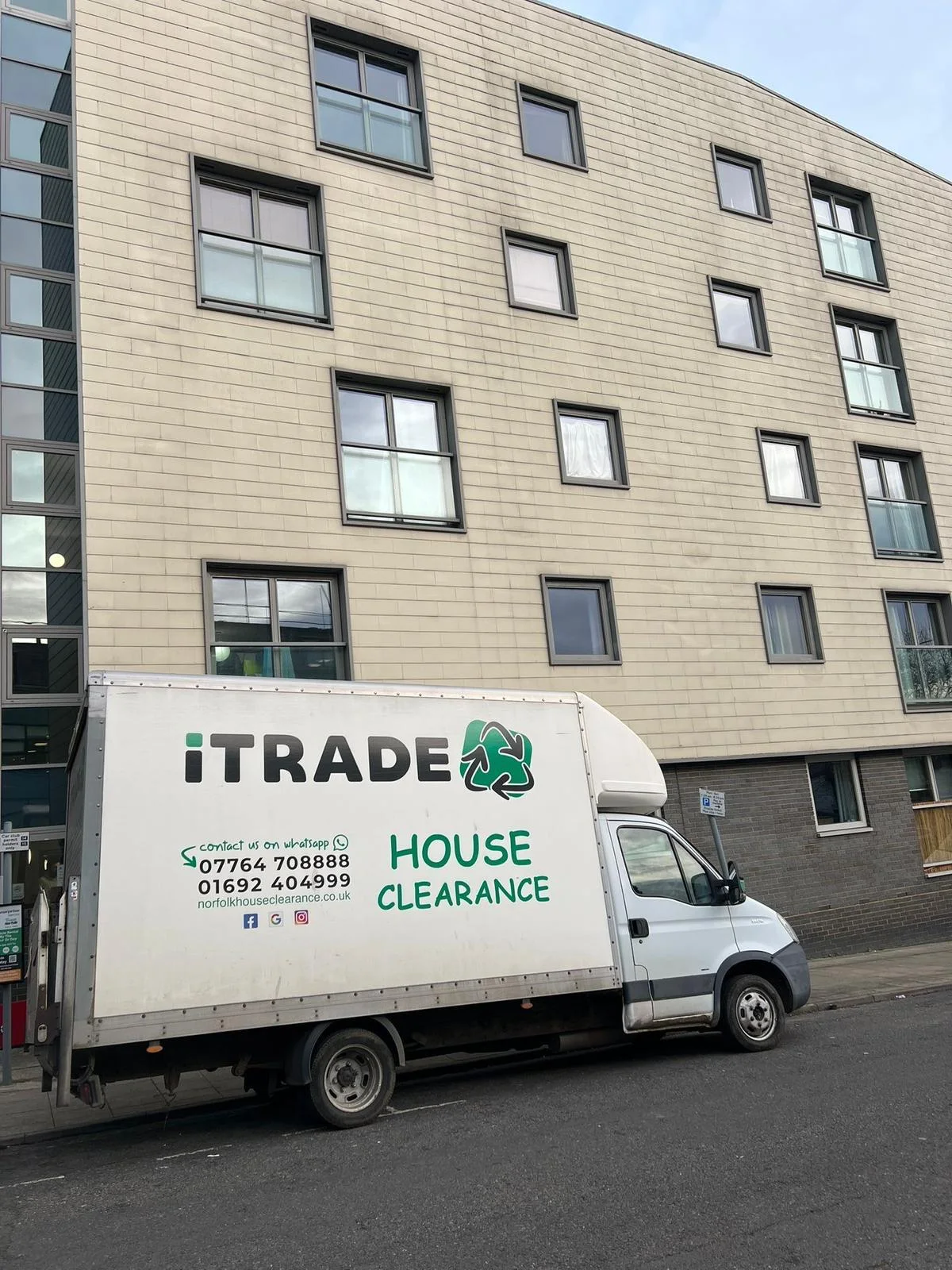
iTrade clearance vehicle outside a multi-storey residential building
An iTrade vehicle positioned for access at a multi-storey property.

Your quote

What affects the price

Factors iTrade weighs when quoting
FactorWhat it means for your quote
Volume of contentsHow much there is to remove from the flat.
Lift size and stairsA small or unavailable lift, several flights and tight turns add carrying time.
Loading point and carry distanceWhere a vehicle can stop safely, and how far items must be moved, affects time.
Building rules and bookingsLift bookings, loading windows or parking permits can shape the schedule.
Bulky itemsLarge items that must be dismantled to move safely need extra labour.

Responsible handling

What happens to your belongings and waste

The order iTrade works through, from keeping to disposal
StageWhat happens
KeepBelongings identified as retained in the agreed scope are left in place or set aside as instructed; undecided items are excluded from removal.
Reuse and donateSuitable items are kept separate for reuse when an appropriate receiving route is available. Acceptance depends on condition, safety and the receiving organisation’s current criteria.
RecycleRecycling depends on the material, condition and receiving facility's acceptance. Agree how electrical items, upholstered seating and mixed contents will be handled before booking.
Responsible disposalContents that cannot use a suitable reuse or recycling route go for disposal through an authorised receiving route, with the appropriate waste records.

Before you enquire

Before you enquire: the route from your flat to the vehicle

Most flat quotes depend on these details. Send what you can. Anything that photographs do not show clearly can be checked at a survey.

Reassurance and compliance

Paying someone to remove household waste brings a duty of care under section 34(2A) of the Environmental Protection Act 1990. Check the carrier on the Environment Agency register before hiring.

iTrade Recycling Limited's waste carrier registration number is CBDU521652. The official register link below shows the current entry.

Ask the managing agent which contractor documents are required before booking. Send that list to iTrade so each requirement can be checked and agreed in writing before access is arranged.

Read the full guide: how to check a waste carrier registration

Official guidance

Check the official guidance

Use these official records and guidance pages to check the waste, safety or legal information referenced above.

Common questions

Frequently asked

Can you clear a flat with no lift?

A no-lift flat needs assessment of the stairs, turns, item sizes and safe carrying method before it can be confirmed. Share the floor level and photographs of the route so the quote reflects the actual access.

What if a large item won't fit in the lift?

The route must be reassessed. Stairs or safe dismantling may be options, but they are not guaranteed. Share the lift opening, dimensions and weight limit, and tell iTrade if the lift becomes unavailable before the visit.

Who arranges the lift booking and parking?

Usually you or the managing agent, because the building controls them. iTrade plans around the slot you secure. Agree who is responsible for each booking before the date is fixed.

Why might you need a survey if I've sent photos?

Photographs do not always show stair turning space, lift size or the distance to the loading point. Where those are unclear, a short survey avoids a quote based on guesswork.

Can you clear just part of the flat?

Yes. A flat clearance can be full or partial, whichever you agree in advance.

What can't you take?

Communal-area items and neighbours' belongings are left alone. Chemicals, fuels, gas bottles and clinical waste need a specialist route. Suspected asbestos needs a competent assessment, and some asbestos work requires an HSE-licensed contractor.

Practical guidance

Guides related to flat & apartment clearance

Talk it through

Tell iTrade about the property

Share a few details and get a clear, no-obligation quote. If it helps to talk first, call and we will guide you through what is involved.