Commercial Clearance & Waste

Office Clearance & Strip-Out

Office clearance and strip-out removes furniture, IT and general contents from a workspace, and can strip out partitions, cabling and fittings back to shell where a lease requires it. iTrade plans the work around your staff, handover date and data-security needs.

Quick answer

Who it is for: Businesses, office managers, landlords and agents clearing or handing back office space.

What it covers: Furniture, IT and contents removal, with optional strip-out of partitions, floor coverings and fittings, and the transfer records a business needs.

When a survey is needed: A survey is usually needed, to confirm scope, access, any out-of-hours working, and the line between a contents clearance and a full strip-out.

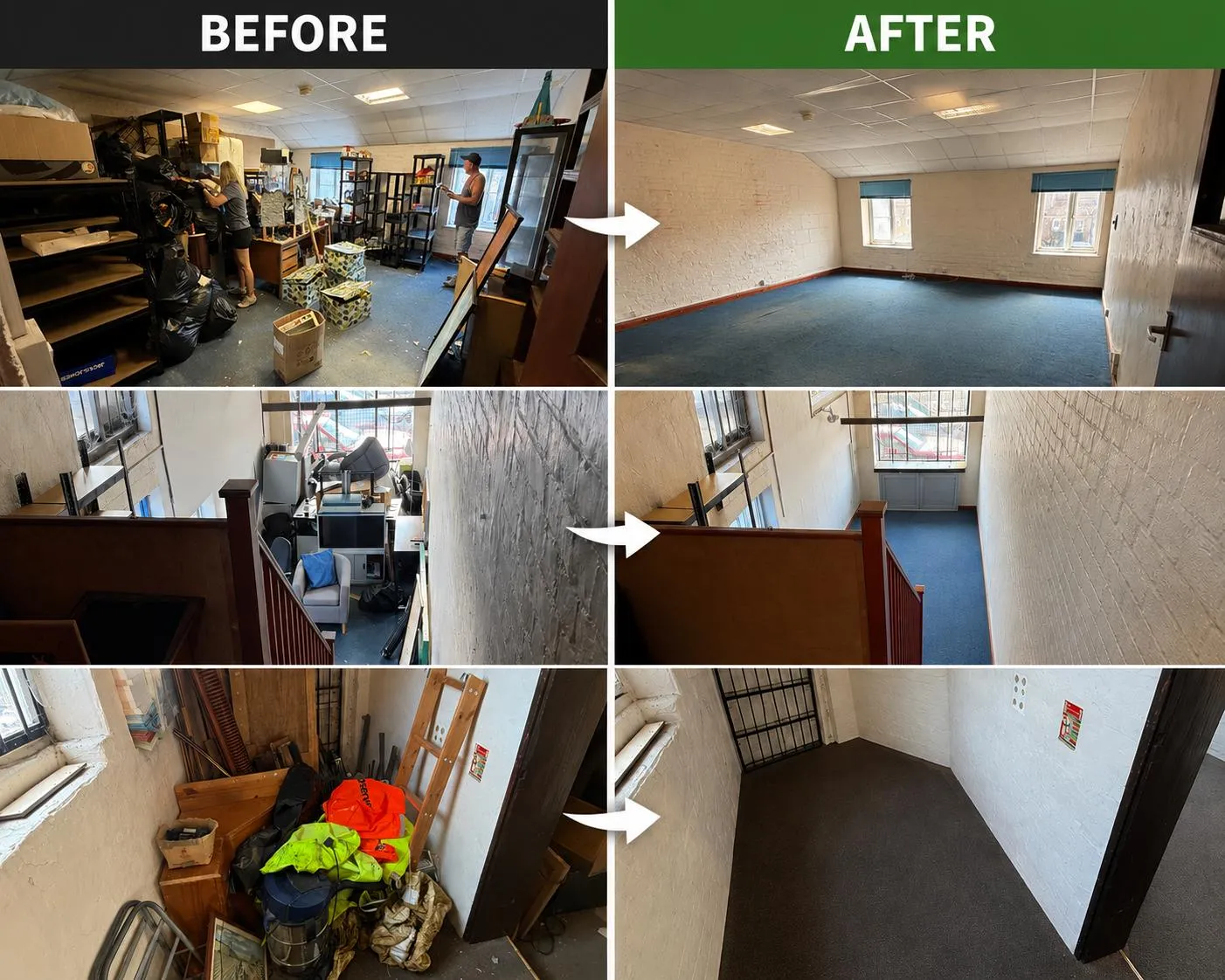
Office clearances range from removing furniture and IT to a full strip-out back to shell for a lease handover. Defining that boundary early avoids disputes over dilapidations later.

Two things shape most office jobs: data security, and timing. Data-bearing equipment is separated, and the work is planned around staff, customers or a fixed handover date.

Scope

What is included, what needs checking, and what is not

Included as standard
  • Removal of desks, chairs, storage and general office furniture
  • Removal of general office contents and waste
  • Coordinating separation of IT and data-bearing equipment
  • Reuse and recycling of furniture and materials where possible
  • Business waste transfer records
Conditional or quoted separately
  • Strip-out of partitions, carpet tiles, cabling and fittings to an agreed spec
  • Out-of-hours or phased work around trading
  • Secure data destruction, arranged separately or with a partner
  • Lift or loading-bay access in shared buildings
Not included
  • Asbestos, sometimes found in older ceiling tiles or flooring, which needs a separate, competent assessment. Some asbestos work requires an HSE-licensed contractor
  • Live electrical or mechanical disconnection needing a qualified trade
  • Anything not agreed for removal

How the work runs

From first enquiry to handover

  1. Enquiry

    Tell iTrade the floor area, whether it is a contents clearance or strip-out, and the handover date.

  2. Site survey and scope

    iTrade confirms the scope, access, out-of-hours needs and the strip-out spec if any.

  3. Written quotation and schedule

    You receive a quote and a schedule that works around your business.

  4. Clearance or strip-out

    The team clears, and strips out where agreed, protecting shared areas and working to the schedule.

  5. Handover and records

    The completed area is checked against the agreed scope. Before booking, confirm which waste transfer record applies to the job, who will issue it and who must retain it.

Your quote

What affects the price

Factors iTrade weighs when quoting
FactorWhat it means for your quote
Volume and furniture quantityDesk count and the amount of furniture and contents to remove.
Contents versus strip-outA strip-out back to shell is a bigger job than a contents clearance.
Access, lift and loadingFloor level, lift availability and loading arrangements in shared buildings.
Out-of-hours or phased workingWorking around staff or trading can affect scheduling and cost.

Responsible handling

What happens to your belongings and waste

The order iTrade works through, from keeping to disposal
StageWhat happens
Keep or relocateItems you are keeping or moving to a new site are set aside or moved by arrangement.
Reuse and donateSuitable items are kept separate for reuse when an appropriate receiving route is available. Acceptance depends on condition, safety and the receiving organisation’s current criteria.
RecycleMetal, WEEE, paper and card are separated for recycling.
Responsible disposalThe remainder goes for controlled disposal under the business duty of care.

Before you enquire

What to have ready for an accurate quote

  • The more of this you can share, the faster iTrade can give a realistic figure:

Reassurance and compliance

As a business, you have a waste duty of care under section 34 of the Environmental Protection Act 1990. That includes passing waste only to an authorised carrier and keeping a waste transfer note for each load for at least two years.

Keep data-bearing equipment separate. Agree the destruction provider, method and any certificate required before collection, then retain the resulting record.

iTrade Recycling Ltd is registered with the Environment Agency as an Upper Tier carrier, broker and dealer under CBDU521652. The public record was checked on 10 August 2026 and expires on 9 February 2027; customers should follow the official register link and check it again before hiring.

Read the full guide: how to check a waste carrier registration

Common questions

Frequently asked

What is the difference between clearance and strip-out?

A clearance removes furniture, IT and contents. A strip-out also removes partitions, floor coverings, cabling and fittings, often back to shell for a lease handover.

Can you work outside office hours?

Evening, weekend or out-of-hours work is not assumed. The working window must be confirmed for the individual job before booking.

How is IT and confidential data handled?

Keep data-bearing equipment separate. Agree the destruction provider, method and any certificate required before collection, then retain the resulting record.

Can office furniture be reused or donated?

Yes, usable furniture is directed to reuse or donation where practical rather than disposal.

What records do we get?

Before booking, confirm which waste transfer record applies to the job, who will issue it and who must retain it. Keep the completed record with the quotation and invoice.

Practical guidance

Guides related to office clearance & strip-out

Talk it through

Tell iTrade about the property

Share a few details and get a clear, no-obligation quote. If it helps to talk first, call and we will guide you through what is involved.