
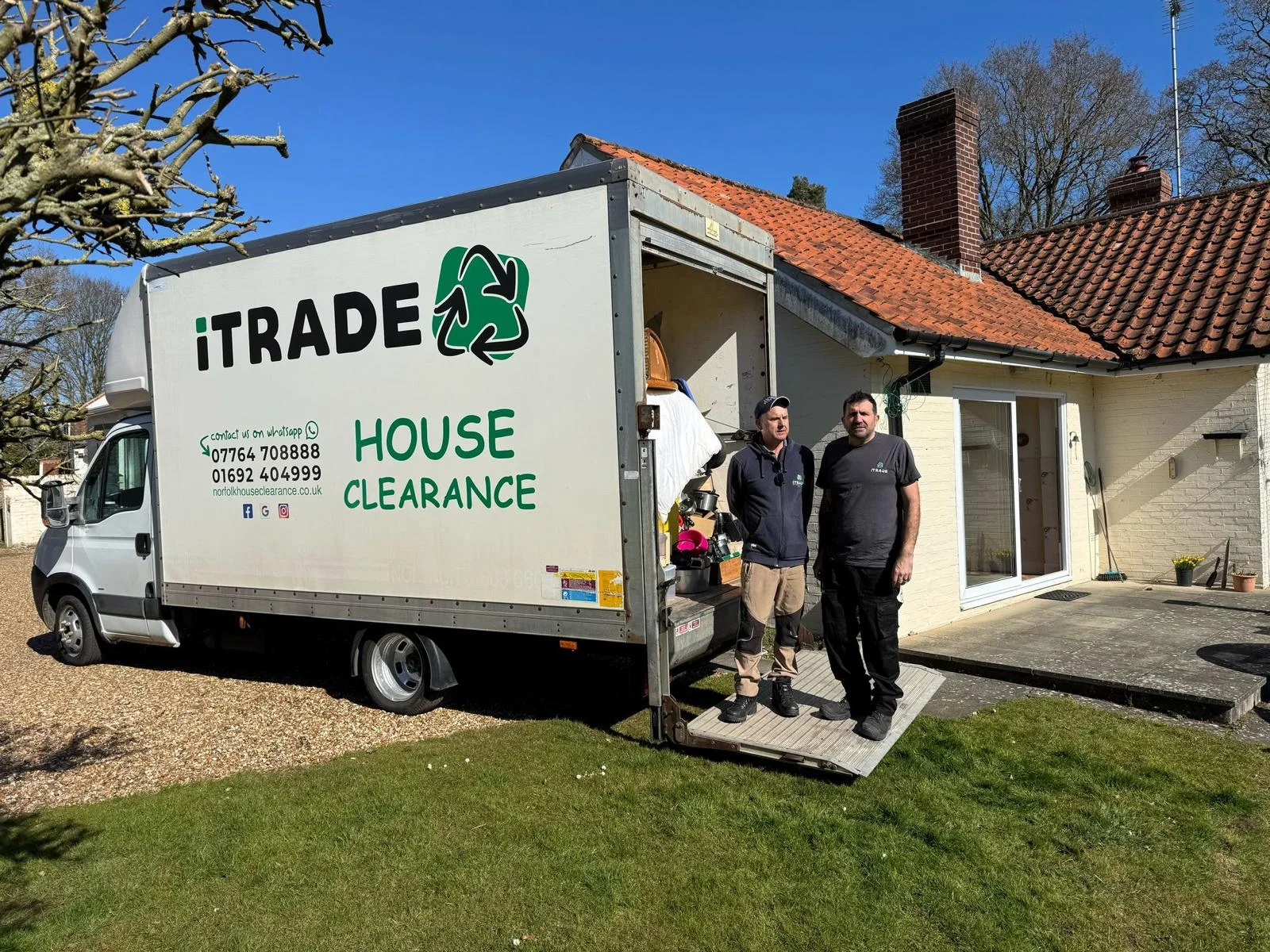
A practical approach to clearance
Good clearance work starts with a clear instruction. iTrade asks what must stay, what can be removed, how the property can be accessed and which items may need a separate waste or specialist route.
The agreed scope should cover the work, exclusions, access, timing and price before the collection begins. Sensitive jobs, including bereavement and probate clearances, also need clear authority from the person entitled to give instructions.
Who iTrade works with
iTrade works with homeowners, families, landlords, estate agents, executors and solicitors across Norfolk. The job may involve one bulky item, selected rooms or a complete property; the quotation should still identify the contents, access, exclusions and required handover.
How saleable items affect a quote
Some household contents may have a resale value. iTrade can take an agreed purchase or credit into account, but no value is assumed: the item and amount must be recorded in writing before removal. Read the saleable-items guide and service terms before relying on an offset.
What customers should expect
- Questions about volume, access, item types and anything that must be retained.
- A survey or photographs when they are needed to define the job.
- A written scope that records inclusions, exclusions and any specialist work.
- Suitable separation of items for retention, reuse, recycling or lawful disposal.
- A handover checked against the agreed work.
See what to expect from the first enquiry through to property handover.
Owner-led practical guidance
Joff is an owner of iTrade and shares practical guidance about planning clearance, waste handling and property handover. For legal or specialist safety questions, use the relevant official guidance or a suitably qualified professional.
Check important claims
iTrade is the trading name of iTrade Recycling Ltd, company number 14014263. The company appears on the Environment Agency public register as an Upper Tier carrier, broker and dealer under registration CBDU521652. Customers can inspect the dates, registered address and official source on the verification page.