
For a Norwich house sale, start with the rooms an agent or buyer needs to inspect and the belongings that must remain. A full clearance and a partial removal have different scopes. List cupboards, storage spaces and outbuildings explicitly; photographs of furnished rooms do not show everything that may need to leave.
In a flat, the loading route begins at the room, not at the communal entrance. Tell iTrade about the floor level, lift dimensions, steps and any building-manager arrangements. Keep access for other residents in mind when discussing the work window.
A small collection may not need the same service as a whole-home clearance. Norwich residents comparing options should check whether they can move the accepted items outside for the council service. For loading from rooms or mixed contents, ask for an assessed private collection rather than assuming the two quotes cover identical work.
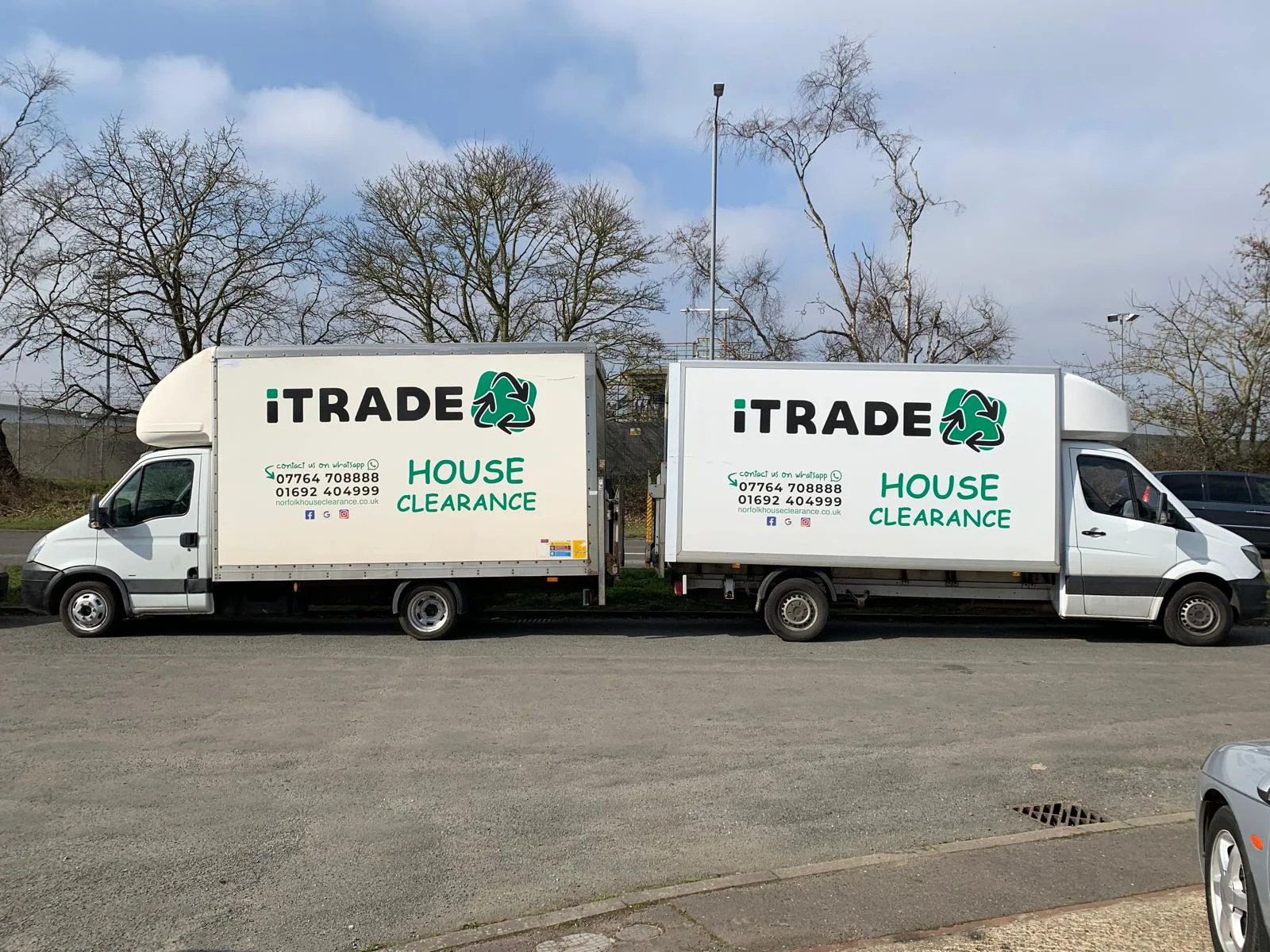
Before a Norwich booking, agree the actual loading point and any permissions or restrictions that apply to the property. Do not assume a resident's parking permit authorises a clearance vehicle. Photographs of the entrance and proposed stopping place help identify questions before a date is agreed.
For budgeting, read what affects house clearance costs. If you only need selected items removed, compare partial clearance with a rubbish collection before sending the details.
Access and property notes
- Show the complete route between the rooms and vehicle, including shared passages and steps.
- For furniture in an upper-floor flat, give the lift or stair access details rather than the floor number alone.
- Tell us who can open communal doors or gates and whether access must fit an agreed building-management window.