
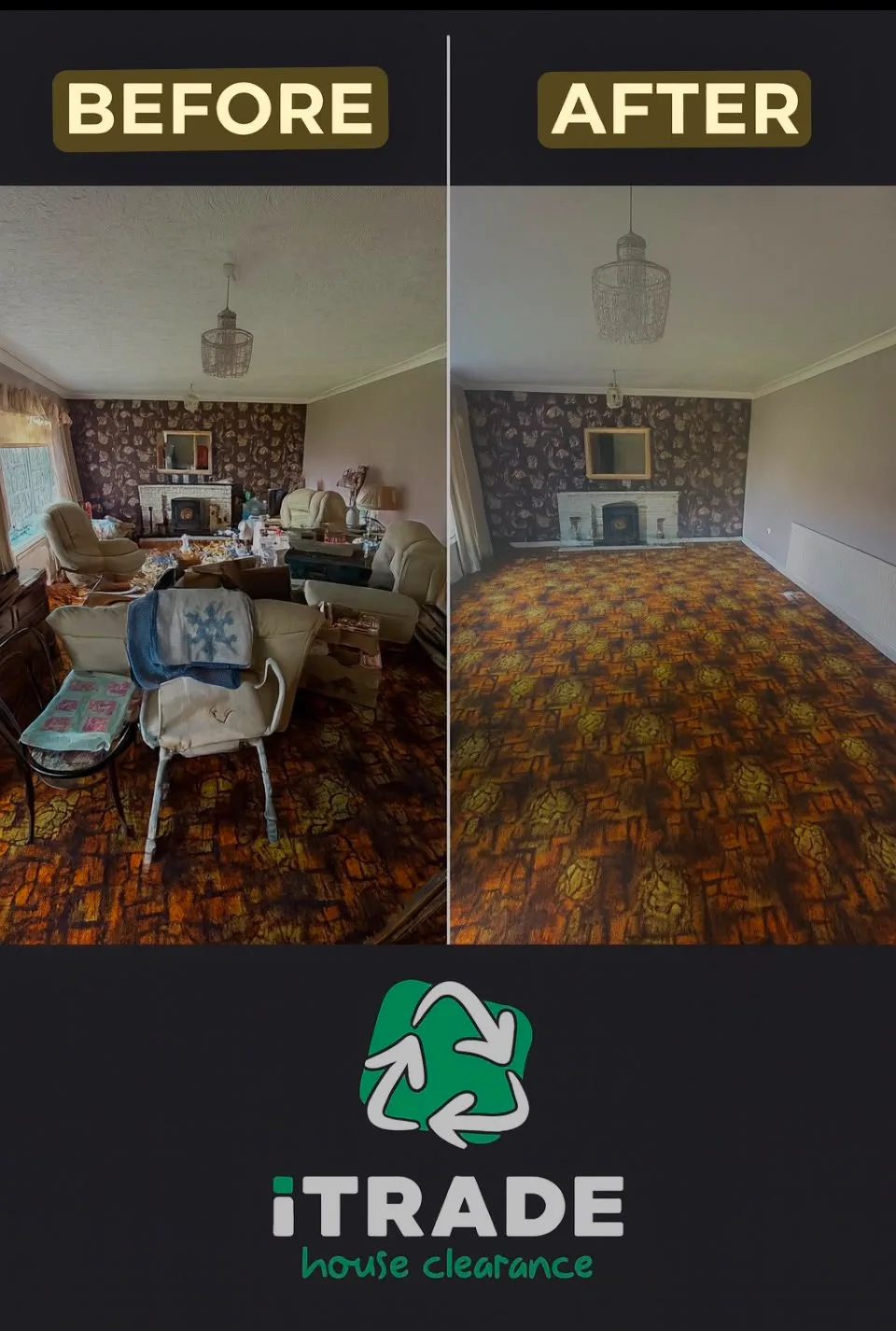
Choose a house clearance company you can identify and check, and one that has cleared homes like yours. It should also put three things in writing: what it will remove, what it will leave, and the total you will pay. Get two or three quotes based on the same description of the job, then compare them line by line, not just on price.
Quotes can differ in ways the headline figure doesn’t show. One may include the loft and garage while another covers only the house. This guide helps you spot those differences before you book.
Quick check before you book
- A business you can identify, with a waste carrier registration you can find on the public register
- Reviews or examples of homes like yours
- Written quotes based on the same details you gave everyone
- A clear list of what is included and left out, and one total price
- An agreed finish and a written list of what stays
- A plain answer about where things go, and a receipt afterwards
Check who you are dealing with
Start with the basics. You should know the company’s trading name and any limited company behind it. You should have a phone number that gets answered. You should also know who will be in charge on the day.
Next, check that the company is allowed to carry waste. GOV.UK advises householders in England who use a private waste collector to look the business up on the Environment Agency’s public register, choosing the upper tier option. A house clearance takes away furniture, belongings and rubbish, so this check applies to you.
The name on the register will not always match the name on the quote word for word. For example, a business may trade under a short name while its limited company holds the registration. What matters is that the link between the two is clear. If you can’t see how the registered business relates to the one quoting you, ask before going further. Our guide to checking a waste carrier registration walks through the register step by step.
Our own registration works this way. We trade as iTrade, and registration CBDU521652 is held by iTrade Recycling Limited. You can see the current record on our waste carrier licence page.
Look for relevant household work
Clearing a family home is different from clearing an office or doing a quick rubbish run. Look for signs that a company handles jobs like yours:
- A parent’s home after a death. This often means handling papers and photos with care, sometimes while relatives collect things first.
- Downsizing. A few rooms may need clearing while the rest of the house stays in use.
- A very full or hoarded home. This needs patience, a clear plan and time for sorting.
Read reviews with care. The Competition and Markets Authority’s guidance on trader recommendation sites suggests that you don’t rely on a badge alone. It also suggests checking what a site actually verifies and comparing evidence from more than one place. The most useful reviews describe real household jobs, how well the team kept in touch and whether the house was left as agreed.
Photos of finished rooms help too. You can see examples in our clearance job gallery.
Give every company the same details
You can only compare quotes if every company is pricing the same job. Write a short description and send it to everyone on your shortlist. If companies visit, show each one the same areas.
Your description should cover:
- What needs clearing. List every room, plus the loft, garage, shed and garden if they are part of the job.
- What stays. This could be anything from a single wardrobe to a whole room.
- Access. Mention stairs, lifts, parking, narrow paths, who holds the keys and any times when work can’t happen.
- Items you are unsure about. Examples include paint tins, gas bottles and garden chemicals.
- Anything already gone. Note anything family members have taken.
Without this, a cheaper quote may simply be for a smaller job.
It helps to decide what you are keeping first. Our checklist of what to keep, remove and record can help. If the house is part of an estate, see who can authorise a house clearance during probate.
Compare what is included and the total
Ask every company the same questions:
- Is this the total you will pay, or a “from” price?
- Is it fixed or an estimate, and what could change it on the day?
- Does the price take account of any items they may resell?
- Is there anything they won’t take?
- Will you get a written receipt?
Comparing the answers side by side shows what each quote actually covers. Some items fall outside a normal clearance and need to be dealt with separately. Our guide to what a clearance company cannot safely remove explains why. For what affects the price, see our house clearance costs guide.
| What to compare | Question to ask | What a clear answer looks like |
|---|---|---|
| Registration | What is your waste carrier registration number, and whose name is it in? | A number on the public register, held by the business quoting you or by a company whose link to it is clearly explained. |
| Scope | Which rooms and outside areas are included, and is there anything you won't take? | The loft, garage, shed and garden each named as included or left out, with any exclusions listed. |
| Total payable | Is this the full amount, and what could change it? | One total, either fixed or clearly explained, with any possible extras listed. |
| Finish | How will the rooms be left? | Agreed detail on carpets, fittings, appliances and whether rooms are swept. |
| Items staying | How will you make sure kept items stay? | A written list and a walk-round, not just a spoken promise. |
| Handling and receipt | Where do things go, and what will I get afterwards? | A plain explanation, plus a receipt showing the company name, contact details and amount paid. |
Agree the finish and what stays
“Cleared” can mean different things. The photo at the top of this page shows a lounge with the furniture gone but the carpet, fireplace and mirror still in place. That might suit a family preparing for viewings. It could shock someone who expected the carpet to go.
Agree these points in writing before the day:
- Floor and window coverings. Will the carpets, underlay, curtains and blinds go or stay?
- Fixed items. What happens to mirrors, shelves and light fittings?
- Appliances. Will the cooker, fridge and washing machine be removed?
- The finish. Will rooms be emptied only, or left swept?
- Stored contents. What happens with the loft, garage and shed?
Make kept items easy to spot. Label them, or group them in one room if they are light and safe to move. Don’t shift heavy furniture yourself. Put it on the list instead. Give the team the written list and walk round together at the start if you can. A final walk-round before they leave lets you check that nothing on the list has gone.
Ask about handling and keep simple records
Ask what usually happens to belongings: what may be reused, what is recycled and what goes as waste. You don’t need a long report, but a vague answer is a reason to keep looking.
The government’s waste duty of care code of practice explains that householders handing over their own household waste don’t need the waste transfer notes that businesses use. That exemption covers domestic occupiers’ own household waste. It does not cover a landlord clearing a property after tenants have left. If you are a landlord, see our landlord checklist after lawful possession of an abandoned property.
It is also sensible to keep a note of your registration check and a receipt showing the company’s name, contact details and what you paid. These help if a solicitor, relative or buyer asks questions later.
Warning signs before booking
Slow down or look elsewhere if you notice:
- no clear business name, or details that change between messages
- no registration number, or a registration you can’t connect to the business quoting you
- a firm price before any questions about the property
- “everything included” with nothing written down
- pressure to book today, or a price that is only on offer for a short time
- no straight answer about where things will go
- no receipt offered, or full payment asked for up front with nothing in writing
One of these alone may have a simple explanation. Several together are a reason to choose someone else.
Common questions
How many quotes should I get?
Two or three is usually enough to compare without losing time. What matters most is that every company prices the same job from the same details.
Do I need to be at the property on the day?
Not always. Someone with the right to agree the work should settle the plan, the list of what stays and how the team will get in. If you can’t be there, agree who holds the keys and who the team should phone with questions. Also agree how you will check the house afterwards, such as a walk-round by a family member or photos.
What if papers, photos or money turn up during the clearance?
Agree this with each company before you book. Ask what the team will do if they come across documents, photos, cash or jewellery, and how those items will reach you. No team can promise to find everything tucked away in a home. Take out anything important first where you can do so safely, such as from drawers, coat pockets, handbags and boxes within easy reach. Don’t climb into the loft or move heavy furniture to search. Tell the team where you think things might be, and agree how those areas will be handled.
Next steps
Pick two or three companies, send each one the same description, and compare their written quotes using the table above.
If you’d like iTrade to be one of them, we clear homes across Norfolk and nearby areas. Our work includes:
- full and partial clearances
- homes after a bereavement
- flats
- very full or hoarded properties
- clearances after a tenancy ends, where the person instructing us has lawful possession of the property or authority to clear it
You can read about our house and property clearance services, call 01692 404999 or send us the details of the property. Give us the same rooms, access notes and list of what stays that you give everyone else. That way, our quote reflects the job you actually have.
Sources and official guidance
Before you book or make arrangements, check the relevant authority’s latest guidance. Collection rules and safety requirements can change.
- Dispose of household waste — GOV.UK Official source, checked 31 October 2026
- Householders’ waste duty of care — GOV.UK Official source, checked 31 October 2026
- Choosing and checking traders online — Competition and Markets Authority Official source, checked 31 October 2026